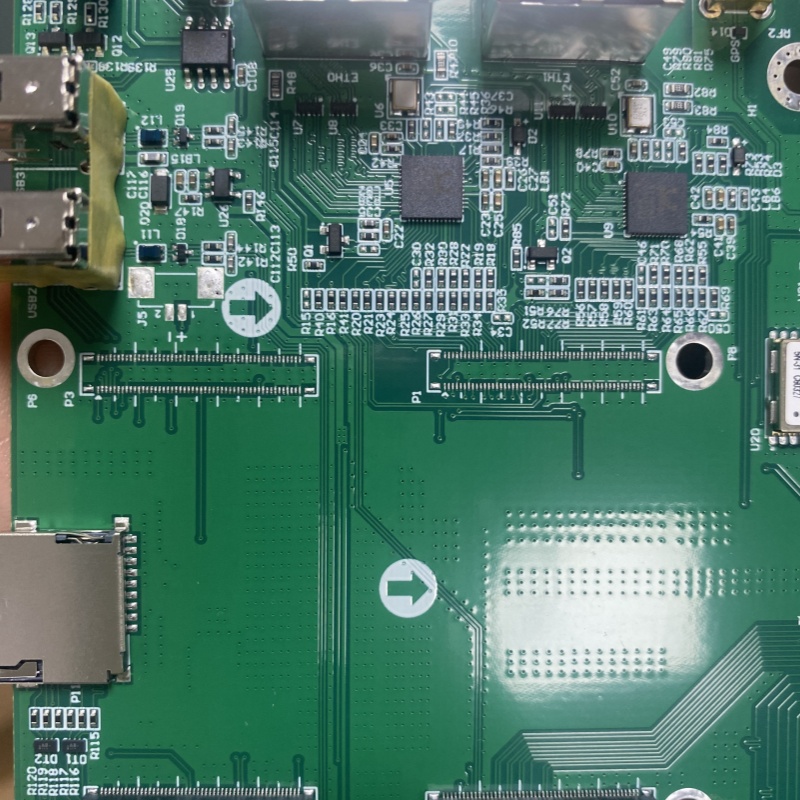
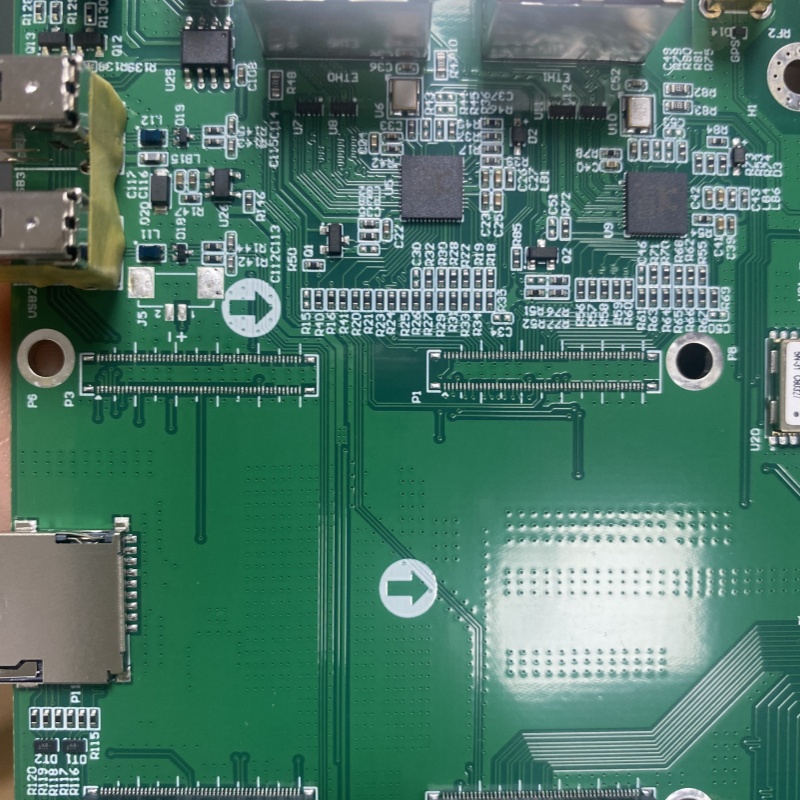
Step 1: Display the circuit board to be disassembled
Take out the industrial control circuit board that I need to process today and lay it flat on the workbench. I carefully observe the layout of the whole board, accurately locate three on-board connectors that need to be removed. Meanwhile, I check the appearance of the circuit board in all directions to confirm there is no crack on the board and no worn circuits. I eliminate potential basic risks in advance and finish all preparations before disassembly.
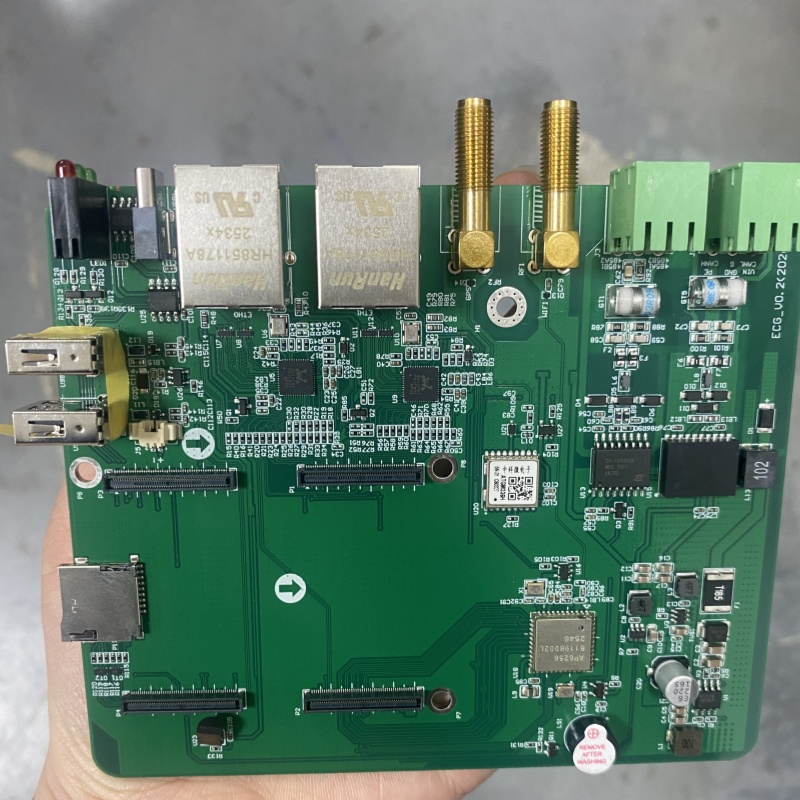
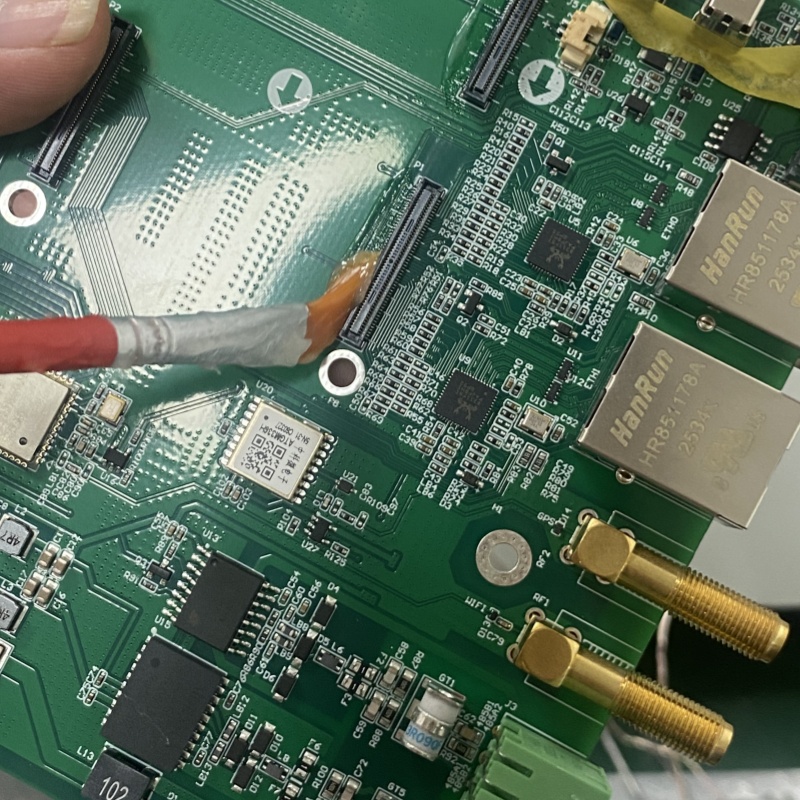
Step 2:Apply soldering flux on all target connectors
I take out eco-friendly soldering flux and use a dispensing tool to evenly apply a thin layer of flux on all pin solder joints of the three target connectors. The flux can fully penetrate every gap of solder points. It not only helps the solder melt quickly and reduce disassembly resistance, but also isolates high temperature during heating, protecting PCB pads from scorching and pad falling off effectively.
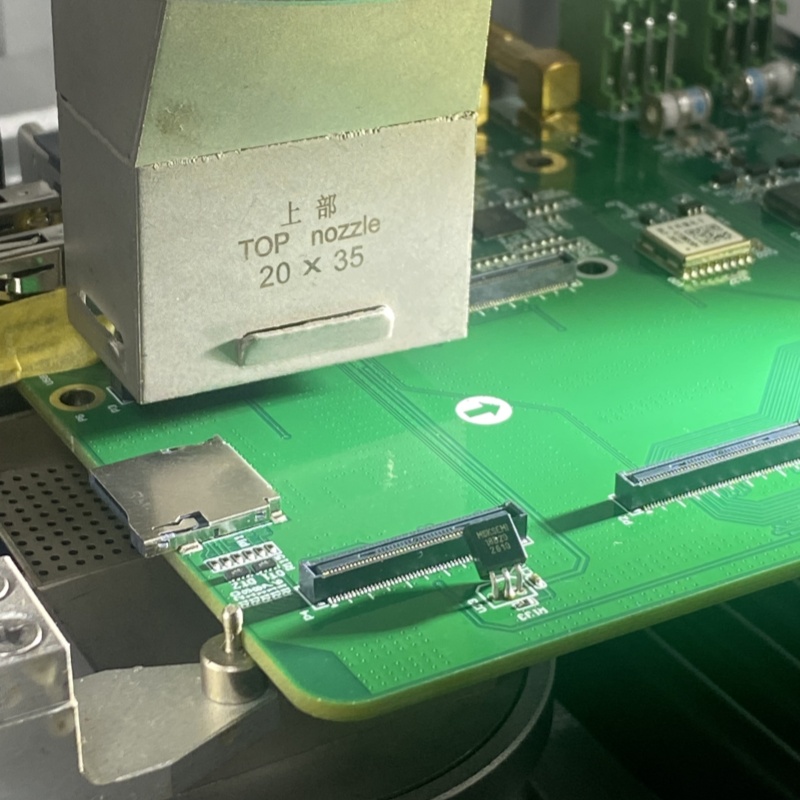
Step 3: Fix the board on BGA rework station and start heating
I clamp and fix the processed circuit board stably on the working station of the BGA rework station, and adjust the tightness of fixtures to prevent the board from deforming under pressure. I replace a matched upper hot air nozzle according to the size of connectors, calibrate the vertical distance between nozzle and solder points, and set proper lead-free soldering temperature parameters for upper and lower heating zones. After double-checking all settings, I turn on the machine to heat the target connectors evenly at constant temperature.
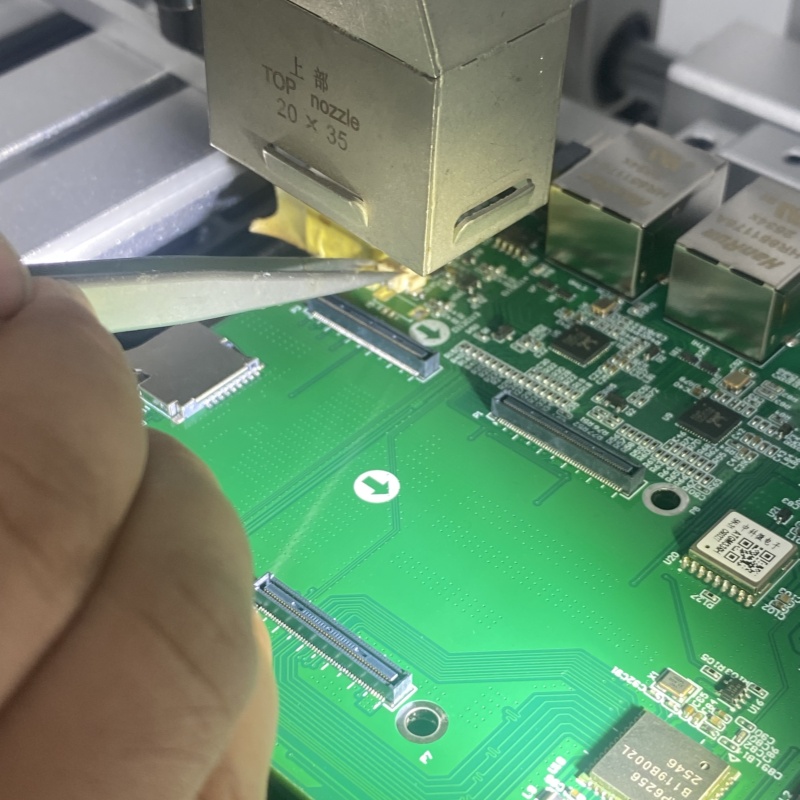
Step 4: Remove connectors gently with tweezers
I keep an eye on the solder joints all the time. Once the solder inside melts completely into liquid state, I pick up anti-static precision tweezers immediately. I apply gentle force along the placement direction of connectors and take down three connectors one by one steadily. All movements are soft and controlled without violent pulling or shaking, to avoid breaking circuit traces or stripping pads due to improper operation.
Step 5: Complete disassembly and inspect finished board
After all three connectors are removed completely, I turn off the heating function of the rework station right away and leave the circuit board to cool down naturally. When the board temperature drops to room temperature, I carefully check the integrity of pads at each disassembly position, clean residual solder slag and excess flux on the board. I confirm there is no pad loss, broken circuit or heat damage, then the whole disassembly work comes to an end.