🚗 Why Automotive Electronics Repair Requires Dedicated BGA Rework Stations: Market Data and Practical Guide
As automotive electronic systems grow increasingly complex, BGA (Ball Grid Array) packaged chips are becoming more prevalent in critical modules such as ECUs (Engine Control Units), ADAS (Advanced Driver Assistance Systems), and BMS (Battery Management Systems). Traditional manual soldering and standard hot air guns can no longer meet the reliability and efficiency demands of these high-density, multi-layer circuit boards. Professional BGA rework stations are becoming standard equipment in automotive electronics repair.
📌 Market Data: Growth Trends in BGA Rework Stations and Automotive Electronics Repair
-
According to a report by Market Intelo, the global BGA Rework Station Market was valued at approximately $312 million in 2024 and is projected to grow to around $520 million by 2033, with a compound annual growth rate (CAGR) of approximately 5.8%.
-
ResearchAndMarkets indicates that the global Automotive Electronics Repair Market is projected to grow from approximately $43.68 billion in 2024 to an estimated $68.82 billion by 2032, also at a CAGR of approximately 5.8%.
These figures indicate that demand for precision rework equipment is growing in tandem with the automotive electronics repair market, with BGA rework stations evolving from “optional tools” to essential equipment for high-value-added repair operations.
🧠 Root Cause: Why Professional BGA Rework Stations Are Essential for Automotive Electronics Repair
1. The Pervasiveness of High-Density BGA Packaging in Automotive Control Units
-
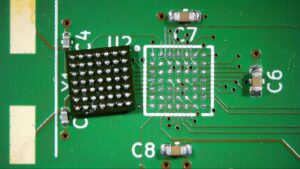
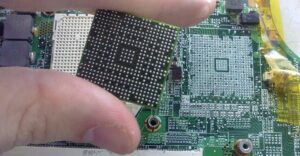
Modern ECUs, TCUs, ADAS controllers, BMS, electric drive inverters modules commonly employ multilayer high-density PCBs and large-sized, high-ball-count BGA-packaged chips. All solder joints are concealed beneath the chip, making controlled rework unfeasible with traditional soldering irons or basic hot-air tools.
-
Automotive electronic boards impose stringent requirements on soldering temperature profiles, thermal distribution uniformity, and thermal shock to surrounding components. Overheating can easily cause PCB warping, pad detachment, or latent solder joint defects.
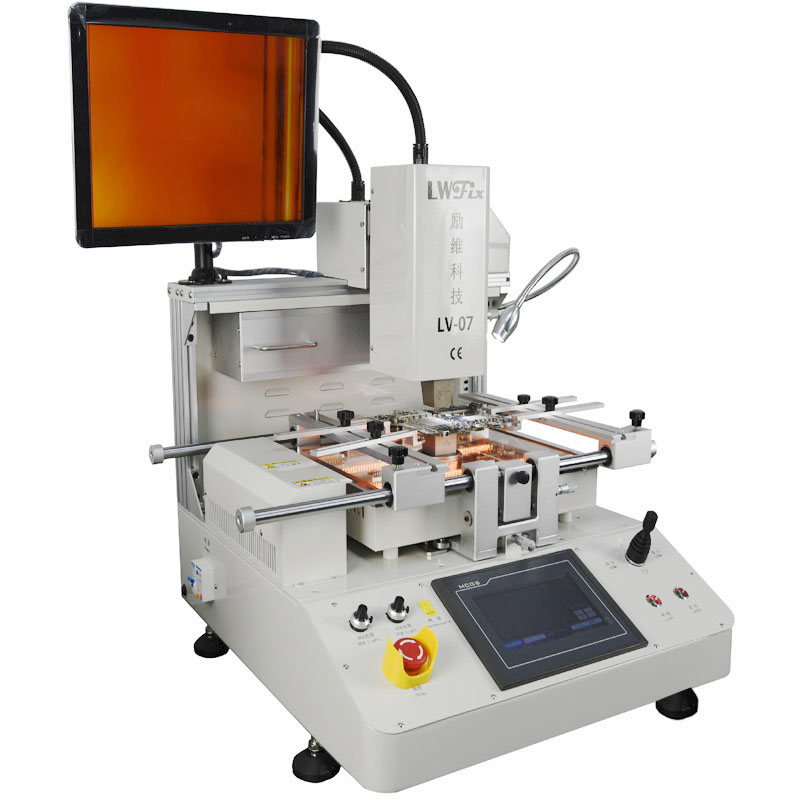
BGA rework stations featuring top/bottom multi-zone heating, precise temperature control, and optical alignment enable chip removal and reinstallation under controlled temperature profiles, significantly reducing secondary damage risks.
2. Repair Costs and Efficiency Drive Precision Rework
-
Replacing entire ECUs, ADAS modules, or BMS controllers within 4S dealerships or OEM systems often incurs high costs and lengthy lead times. Reworking individual faulty chips significantly reduces total costs and minimizes vehicle downtime.
-
Utilizing professional BGA rework stations for chip-level repairs reduces parts costs while maintaining quality. By improving first-pass rework success rates, this approach directly enhances repair shop profit margins and customer satisfaction.
🧩 Solution: Key Considerations for Selecting BGA Rework Stations for Automotive Electronics Repair
✔ 1. Precise Temperature Control and Multi-Zone Heating Capability
-
Recommended models feature top hot air/ infrared + bottom preheating, with independent multi-zone temperature control to develop suitable temperature profiles for automotive PCBs with varying layer counts and copper thicknesses, minimizing board warping and pad lifting risks.
-
Equipment supporting temperature curve logging, closed-loop temperature control, and custom process recipes facilitates subsequent quality traceability and process optimization, making it suitable for standardized repair workshops.
✔ 2. Optical Alignment and Automated Positioning Systems
-
Automotive electronic boards are typically large with dense component placement. High-precision optical alignment systems (optical alignment) ensures precise alignment between BGA solder balls and pads through microscopic imaging and overlay comparison, minimizing misalignment and solder bridging risks.
-
Some mid-to-high-end models also offer automatic X/Y/Z adjustment and nozzle pressure control, enhancing consistency in repetitive tasks and making them suitable for batch repair or remanufacturing operations.
✔ 3. Compatibility with Multiple Automotive Electronic Packages and Modules
-
We recommend selecting equipment compatible with standard BGAs, uBGAs, CSPs, CCGAs, PoPs, QFNs/MLFs to cover repair needs across diverse circuit boards—from powertrain control to infotainment and gateway modules.
-
For workshops specializing in new energy vehicle three-electric systems and ADAS/domain controllers, multi-package compatibility significantly extends equipment lifecycles and reduces subsequent redundant investments.
✔ 4. Software and Process Support
-
BGA rework stations equipped with software features like visual curve editing, process recipe management, and data export are better suited for standardized, traceable automotive electronics repair environments.
-
Manufacturers offering reference process curves and training support for ECU, ADAS, and BMS-specific boards accelerate onboarding and minimize trial-and-error costs.
⚙️ Real-World Case Study: Outcomes After Introducing a BGA Rework Station at a Repair Center
Taking an automotive electronics repair center specializing in ECU and ADAS modules as an example (data represents typical industry ranges, not a single manufacturer's public commitment):
-
Original Situation: Primarily relied on hot air guns and manual tools for chip-level repairs, resulting in unstable rework success rates. First-pass success rates ranged between 50%–60%, with complex boards exhibiting high second-pass rework rates.
-
Transformation: After introducing a fully automated BGA rework station featuring automated optical alignment, multi-zone heating, and closed-loop temperature control, standardized processes and curve tuning resulted in: the first-pass rework success rate increased to approximately 90%, average repair time decreased by 30%–40%, and the overall repair cost per board decreased by approximately 20%–30%.
These metrics are representative of publicly available data from professional BGA rework service providers and electronics manufacturing contract manufacturers, indicating that for repair centers with sufficient business volume, investing in a suitable BGA rework station offers favorable return on investment in the medium to long term.
✅ Conclusion: High-Efficiency BGA Rework Stations Will Become Standard Equipment in Automotive Electronics Repair
Considering market scale, technical complexity, and cost control, the following trends emerge:
-
With the proliferation of new energy vehicles, intelligent driving, and in-vehicle connectivity, BGA packaging density and criticality in automotive electronics continue to rise, driving higher demands on rework processes.
-
BGA rework stations featuring multi-zone temperature control, optical alignment, package compatibility, and visual process management are becoming automotive electronics repair, module remanufacturing, and electronics reuse operations. For repair shops, remanufacturing centers, and electronics engineering studios, early adoption of such equipment will help secure a competitive edge in the future automotive electronics aftermarket.