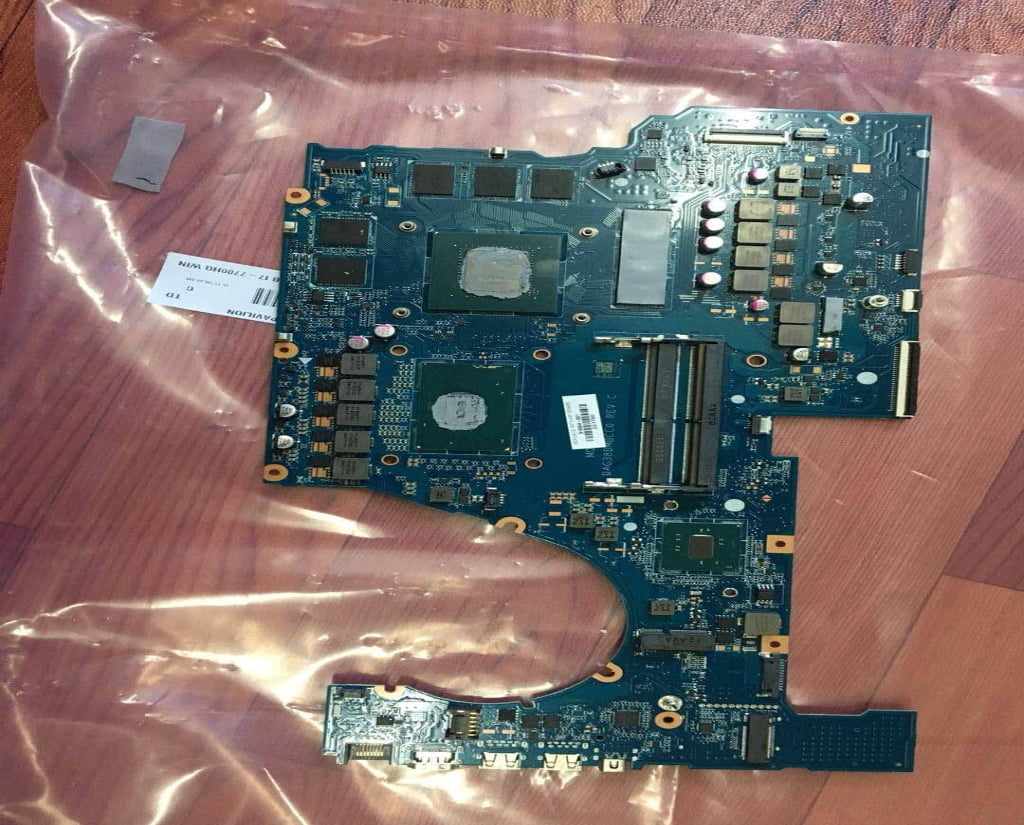
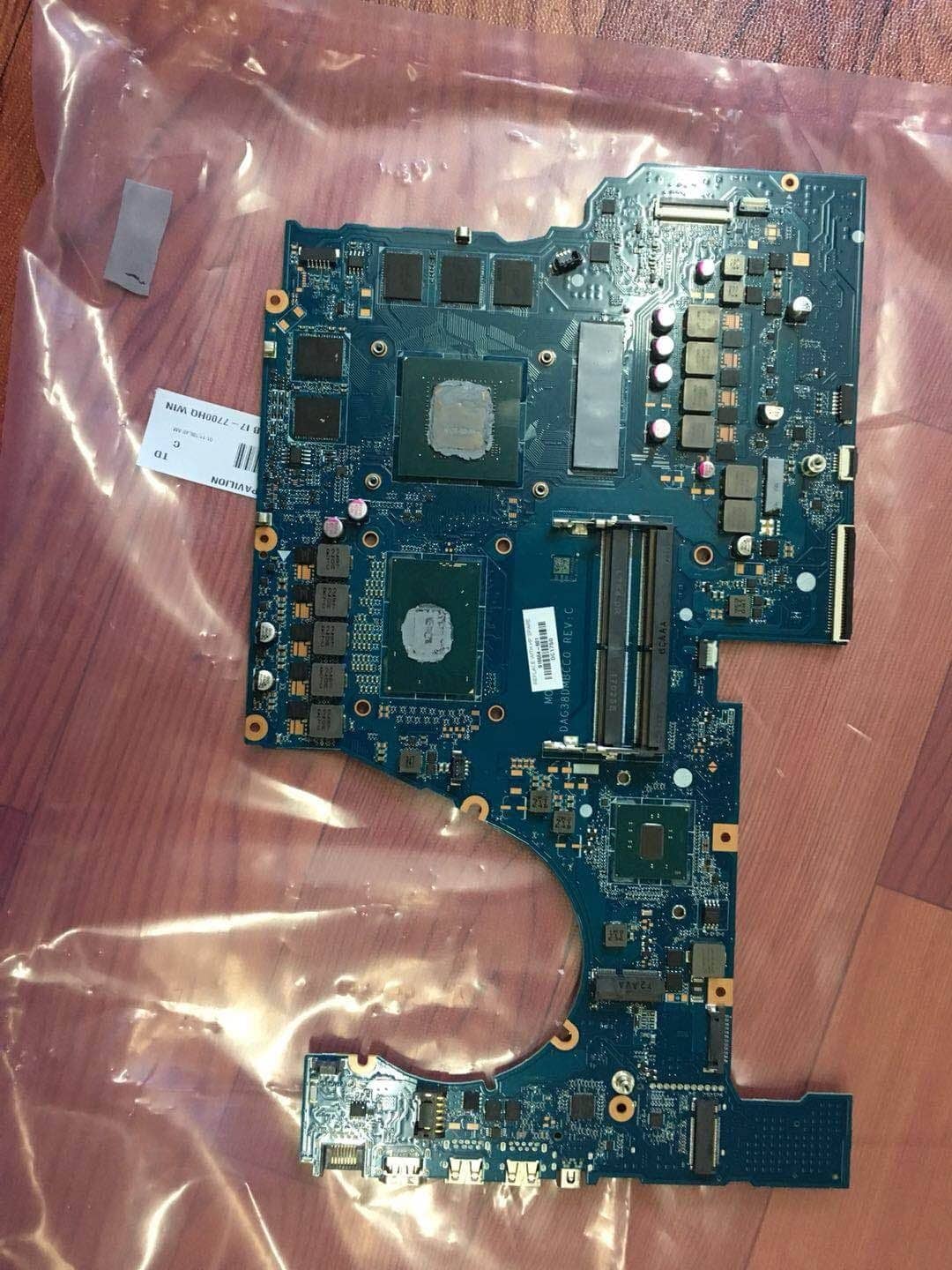
In The Electronics Manufacturing And Maintenance Industry, Bga (Ball Grid Array) Welding Failure, Especially Cold Welding And Virtual Welding, Has Long Plagued Many Technical Engineers. Whether It Is A Notebook Motherboard, A Smart Phone Motherboard, Or A High-Density Pcba (Printed Circuit Board Assembly) Repair, Bga Cold Welding And Virtual Welding Are Often Behind The Phenomenon Of “Repeated Maintenance Is Always Not Working. This Article Will Deeply Analyze The Causes Of Bga Cold Welding And Virtual Welding, And Put Forward Specific Countermeasures And Solutions To Help Engineers Reduce The Defective Rate Of Repair From The Source And Improve The Quality Of Welding.
Three main causes of BGA cold welding and virtual welding
The root cause of BGA welding failure is usually closely related to the following three factors:
1. Internal cold welding due to uneven heat distribution
The traditional hot air table has the problem of temperature difference in the heating process. Although the surface temperature is up to standard, the internal solder joints of the chip may not be completely melted, resulting in the phenomenon of “good surface welding and virtual welding at the bottom.
2. Poor matching between flux and solder ball
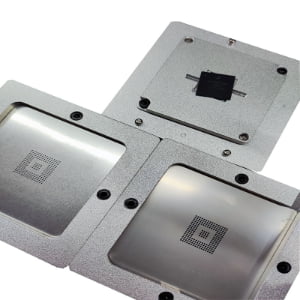
In the maintenance, some engineers still follow the standard solder paste, and ignore the mismatch with the BGA package particle diameter, resulting in insufficient solder ball wettability. In this case, even if electrical conduction can be achieved in a short period of time, the solder joints are prone to virtual welding during long-term use, resulting in short circuits.
3. Superposition effect of stress and warpage
During the soldering process, the difference in the thermal expansion coefficient between the PCB and the BGA chip and the warping of the board layer during the cooling process will exert excessive stress on the solder joints, thereby causing the solder connection to be disconnected. These 1 problems are particularly serious on multi-layer PCB boards (e. g., more than 14 layers) and large-size BGA chips.

Case Record: Successful Counterattack of Notebook Motherboard Repair Enterprises
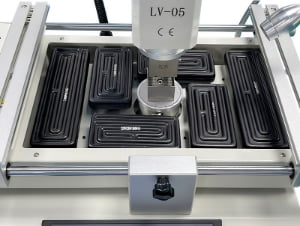
In a notebook motherboard repair enterprise that our company has cooperated with, their monthly BGA repair defect rate is as high as 18%. Engineers often face the dilemma of “electrizing once after welding, but not testing again. However, by introducing our recommended LV-08 Infrared Laser Alignment Automatic Optical Equipment rework station, the enterprise successfully reduced the rework defect rate to less than 3%. Its main optimization measures include:
1. Closed-loop temperature control system
The company has introduced LV-08 Infrared Laser Alignment Automatic Optical Equipment rework station, which monitors and adjusts the temperature control curve in real time to accurately match the welding temperature range of different package types. The temperature difference is controlled within ± 2 ℃, which greatly reduces the occurrence of cold welding.
2. Real-time monitoring of solder joint stress
In order to avoid chip warping during welding, the company has installed a real-time monitoring module for solder joint stress. By monitoring stress changes, engineers can identify and adjust welding strategies during heating.
3. High resolution X-ray inspection
After the welding is completed, combined with high-resolution X-ray inspection equipment for real-time imaging, it can accurately identify the virtual welding and cold welding of the solder joints, find potential problems in advance, and avoid the occurrence of repair.
After 3 months of continuous optimization, the repair defect rate has dropped from 18% to less than 3%, the repair time has been reduced by 32%, and the stable power supply rate of the repair board has reached more than 96%.
4-step cost reduction and efficiency improvement-from experience to data-driven
In view of the frequent occurrence of BGA cold welding and virtual welding, the following 4-step method can help you systematically optimize the welding process and reduce the defective rate from the source:
1. Establish Rework Process Database
Collect and sort out the best soldering temperature rise, heat preservation and reflow parameters of different types of motherboards, and establish a standardized process database to provide a stable starting point for each batch of repairs.
2. Adopt intelligent temperature control equipment
Using constant temperature intelligent reflow system , the air volume in the hot zone is automatically adjusted to ensure that the bottom temperature of the chip does not lag behind and avoid welding failure caused by uneven temperature.
3. Lift detection means
After the welding is completed, not only the electrical test, but also theonline X-ray inspectionmodule should be used to conduct a comprehensive inspection of the connectivity of the solder joints to avoid missing false welding or cold welding problems.
4. Introduce AI process correction mechanism
Through the real-time monitoring of the system, the trend of temperature and pressure in the welding process is analyzed. If the proportion of false welding is abnormal, the AI system can automatically adjust the temperature rise slope and vacuum time, and make automatic correction.
Through these steps, not only can prevent errors before welding, but also correct errors in time after welding, thereby improving the overall welding quality.
Conclusion
Every 1 engineer is eager to solve the problem at one time in the process of welding and maintenance to ensure the long-term stable operation of the repair board. Through fine welding process management and the application of intelligent equipment, BGA cold welding and virtual welding problems can be effectively controlled. This can not only significantly reduce the repair defect rate, but also improve the maintenance efficiency and product quality. It is hoped that every 1 engineers engaged in electronic maintenance can apply these technical optimization schemes in their daily work to make repeated maintenance a history.