📌 Conclusion
The popular “baking method” can sometimes make a GPU or motherboard briefly functional again, but the thermal stress it inflicts on PCB layers, solder joints, and chipset structures is irreversible. In contrast, using a professional three-zone BGA rework station allows precise temperature control and underfill protection for wafer layers, dramatically improving repair success rates and long-term return on investment (ROI).
🔍 1. The Real Risks and Failure Rate of the “Baking Method”
The idea that heating a graphics card or motherboard in an oven will revive it is widespread online. In reality, this process simply heats the entire PCB to remelt old solder joints temporarily.
-
A documented case involved an AMD Radeon RX 7800 XT that failed after a DIY baking attempt. A professional inspection later deemed it “beyond repair” due to severe PCB warping and heat damage.
-
According to discussions on Reddit’s electronics repair forum, the success rate of DIY reballing is “close to zero.” Even experienced technicians struggle to achieve reliable results without industrial-grade tools.
Bottom line: The short-lived revival from baking usually ends in total failure. Heat shock deformation and delamination often cause more severe damage than the original fault.
📊 2. Professional BGA Reballing Success Rate and Market Trends
✅ GPU Reballing Success Rate in 2026
In industrial repair environments, where automated infrared and hot-air BGA rework equipment is paired with X-ray and thermal imaging, GPU repair success rates are now remarkably high:
-
Industry data shows that GPU reballing success rates can reach about 99.2% when advanced tooling and X-ray void detection are used.
-
By comparison, reflow-only repairs (without full reballing) yield 60–90% six-month no-failure rates, depending on skill level and tooling.
Note: These results are based on professional-grade systems with precise temperature curves and process monitoring—not hobbyist setups.
🛠 3. The Role and ROI of Three-Zone BGA Rework Stations
📈 Why Professional Equipment Outperforms Simple DIY Methods
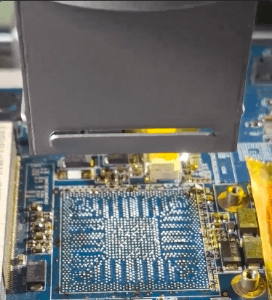
A professional BGA rework station provides three-zone heating/cooling, optical alignment, programmable heat profiles, and real-time monitoring—features essential for consistency and reliability.
-
Temperature precision is typically ±1°C, ensuring each solder joint reflows correctly without overheating the PCB or crystal structures.
-
These systems manage preheating, main heating, and controlled cooling to minimize warping, cracking, or pad cratering.
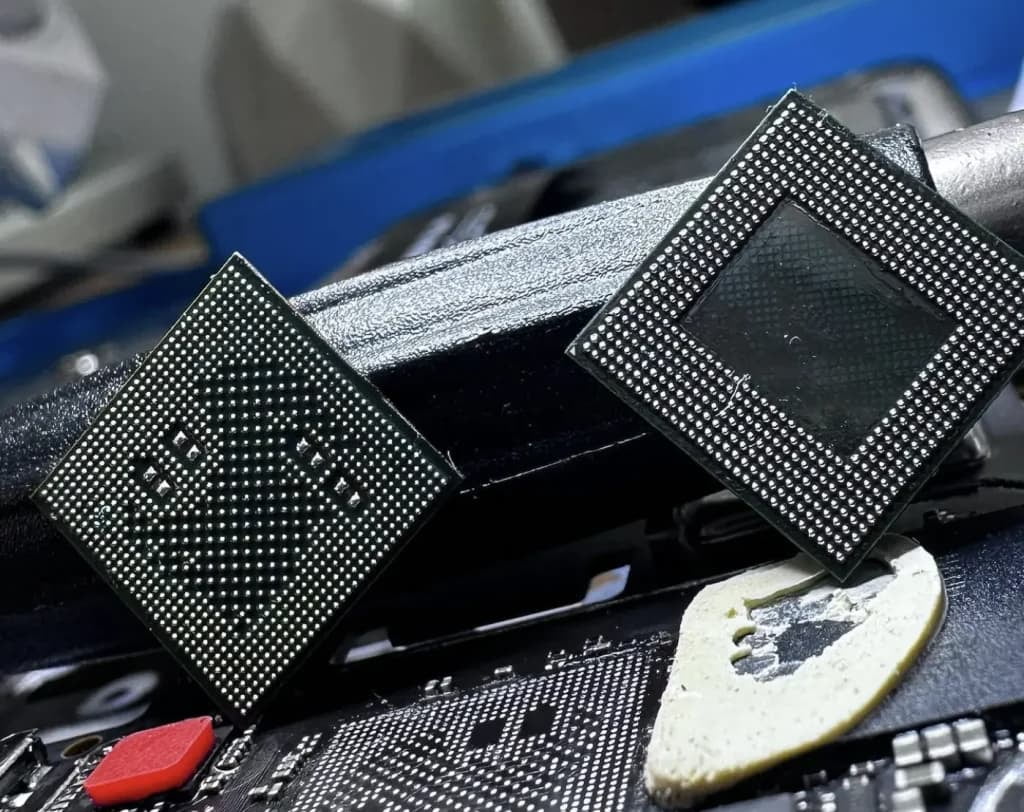
💡 ROI Considerations for Repair Shops
The ROI of professional BGA rework equipment doesn’t just depend on machine cost—it’s about throughput, consistency, and reduced rework rates. Industrial-grade rework stations boast mean time between failures (MTBF) above 95%, making them a high-return asset for repair businesses.
👉 While the upfront investment is significant, the payoff comes from greater daily repair capacity, shorter turnaround times, and improved customer satisfaction.
🔒 4. The Importance of Underfill (Wafer and Solder Joint Protection)
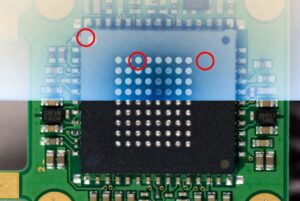
After GPU or SSD reballing, many high-reliability products use an underfill epoxy between the chip and PCB to enhance long-term durability.
-
Underfill helps balance the coefficient of thermal expansion (CTE) mismatch between silicon and PCB, reducing solder joint fatigue.
-
It also boosts vibration and thermal cycling resistance—crucial for servers, AI compute cards, and aerospace electronics.
Note: While underfill is rare in standard consumer GPU repair, it’s essential in environments where longevity and reliability matter most.
⚠️ 5. The Top 3 Reballing Myths of 2026
❌ Myth 1: “Baking Is a Cheap, Universal Fix”
Truth: It might make a card temporarily work, but it permanently weakens the PCB and solder structure, leading to a high long-term failure rate.
❌ Myth 2: “All BGA Reballing Success Rates Are Equal”
Truth: In 2026, a GPU reballing success rate near 99% is achievable only under professional conditions with calibrated stations—not with home tools (Accio Reference).
❌ Myth 3: “A Heat Gun Can Repair Any GPU or Motherboard Chip”
Truth: Without precision temperature control, heating curves, and structural support, solder joints can fail or PCBs can warp beyond recovery.