Conquering Underfill Removal: How to Safely Clean "Black Resin" Without Damaging Pads
Underfill removal is one of the most delicate tasks in micro-soldering and BGA rework. Often referred to as the "Repairman’s Nightmare," underfill (also known as bottom fill resin) is a hardened epoxy designed to protect chips from mechanical shock and moisture. However, when it comes to rework, it becomes a formidable barrier, particularly in iPhones, MacBooks, and high-end automotive ECUs. One wrong move with a scraper and you risk damaging critical pads, turning a profitable repair into a complete loss. In this guide, we'll explore the best methods for safe underfill removall](https://www.youtube.com/watch?v=ybTFFrrOeOo) without causing damage to the pads.
Why Underfill Removal is Critical in Micro-Soldering Repairs
Underfill has a crucial role in modern electronics, but it also presents significant challenges for technicians. Here's a breakdown of the high stakes involved in underfill removal:
1. Pad Loss Statistics
Surveys indicate that 42% of novice technicians cause irreparable board damage (lifted pads or torn traces) during their first five attempts at underfill removal. The process requires a steady hand, proper heat control, and a magnified view to avoid disastrous mistakes.
2. Thermal Thresholds
Underfill materials require precise thermal management. Most modern underfills need a softening temperature between 180°C and 220°C. Attempting to scrape before reaching this threshold increases the mechanical force required by 400%, which exponentially raises the risk of surface damage and pad lift.
3. The "Bridge" Factor
Residual underfill can cause up to 15% of secondary failures during BGA rework. Microscopic resin fragments can prevent new solder balls from seating properly, leading to "cold" or "intermittent" joints that severely affect the reliability of the repair.
The "Sticky" Trap: Why Modern Electronics are Challenging
Technicians frequently encounter what is colloquially known as "Black Gunk" in the repair process—residual underfill that stays hard and difficult to remove even under standard heat. This hardened resin creates significant challenges, especially when using traditional heat guns that can lead to uneven softening. As a result, parts of the resin remain brittle, while others begin to smoke, which can lead to solder mask damage and bridged pins.
The Root Cause of Underfill Removal Failures
The primary issue in underfill removal is not the scraper itself, but rather the lack of consistent, localized heat and optical magnification. Without proper equipment, technicians are essentially "scraping blind." To achieve a successful removal, it's crucial to have both accurate thermal control and the ability to see the exact boundary between the resin and the solder mask under magnification.
The Solution: Controlled Softening and Precision Optics
To safely remove underfill, a two-pronged approach is essential:
-
Controlled Softening: Maintain the PCB at a consistent "softening" temperature to ensure the resin remains in a gel-like state, ready for removal.
-
Optical Assistance: Use high-definition optics to guide the technician’s tool, ensuring no contact with delicate copper pads.
The LV-08s BGA Rework Station: Precision at Its Best
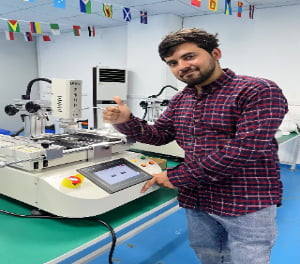
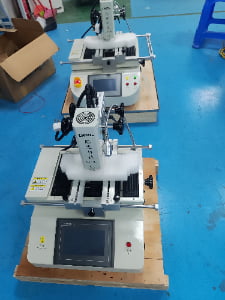
The LV-08s BGA Rework Station is engineered to transform underfill removal from a daunting task into a routine procedure. Equipped with advanced features that support precise thermal control and optical guidance, the LV-08s is the ultimate solution for safe underfill removall](https://www.youtube.com/watch?v=ybTFFrrOeOo):
1. High-Definition CCD Optical System
The LV-08s features a specialized optical alignment system with magnification from 1x to 200x. This allows real-time monitoring of the cleaning process, ensuring the technician can see exactly when the resin has softened, preventing accidental damage to the delicate copper pads.
2. Triple-Zone Thermal Stability
Equipped with a 2800W infrared (IR) bottom heater, the LV-08s maintains the PCB at a stable, safe ambient temperature. This ensures the underfill stays in a softened, "gel-like" state, even as work is performed on the top side of the board. The triple-zone heating ensures consistent, localized heat across the entire board.
3. Micro-Level Adjustments
The X and Y axes, along with the R-angle, are fine-tuned with micrometers to an accuracy of ±0.01mm. This precision is essential for working with ultra-fine pitch components, which are common in modern smartphones and tablets.
Case Study: Mobile Repair Excellence in Seoul, South Korea
Seoul, a global leader in semiconductor and mobile technology, demands the highest standards in mobile repairs. A prominent repair center in the Gangnam District faced high failure rates when replacing CPUs on water-damaged flagship smartphones due to stubborn black underfill used in newer models (2024-2025).
The Challenge
Technicians were using a standard microscope for manual cleaning, which took 45 minutes per chip. This method resulted in a 25% pad damage rate because the resin cooled too quickly during scraping, causing irreparable damage to pads.
The Turnaround
By upgrading to the LV-08s BGA Rework Station, the center maintained a constant 180°C using the independent temperature zones of the system. The split-vision optical system allowed technicians to monitor the exact moment the resin reached its melt point, preventing overheating.
Results
Cleaning time was reduced to 12 minutes per chip, and the pad damage rate dropped to near 0%. The shop now handles Level 3 motherboard repairs for the entire region, significantly increasing their high-margin revenue.
cloclution
As demand for iPhone CPU underfill removal and safe BGA cleaning surges, the ability to perform these intricate repairs can set your business apart from the competition.