
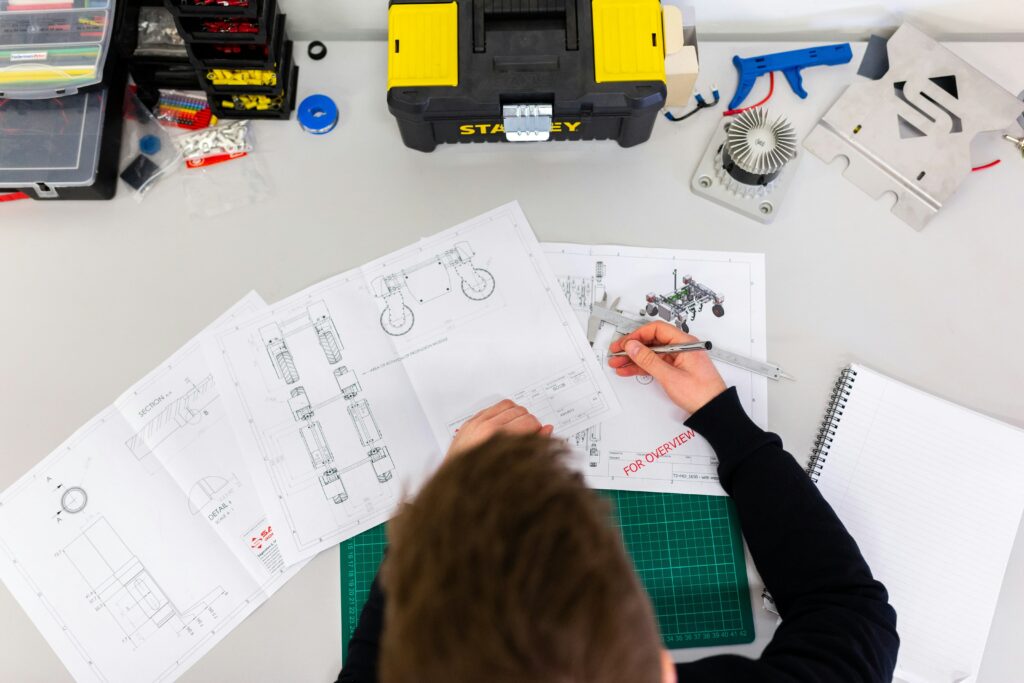
When an ECU failure occurs in an electric vehicle (EV), the standard solution offered by official after-sales service is typically “complete replacement.” However, from an electronic engineering perspective, many failures caused by BGA Solder Failure possess extremely high repair value under professional conditions.
This article aims to help vehicle owners and engineers determine through engineering risk assessment whether your ECU is truly “worth repairing” or “must be replaced.”
Failure Levels: The Core Dimension Determining Repairability
Assessing an ECU's Repairability hinges on identifying the physical level where failure occurs:
-
Software/Configuration Layer: Calibration errors, OTA firmware bugs. Resolvable by reprogramming.
-
Solder Joints and Interconnect Layer (BGA Solder Balls): This represents the core repair zone for high-value ECUs. Solder ball cracks caused by thermal cycling can be reset using specialized equipment.
-
Chip Body Layer: Damage to the internal silicon die of MCUs/SoCs or package breakdown. Such failures are typically irreversible.
-
PCB Structural Layer: Substrate delamination or severe carbonization. This involves permanent physical destruction of the board's structure.
📌 Industry Perspective: Only Layer 2 “Solder Joint Failure” represents the most cost-effective and technically mature domain for third-party repairs.
Typical Scenarios for [Potential Repair]
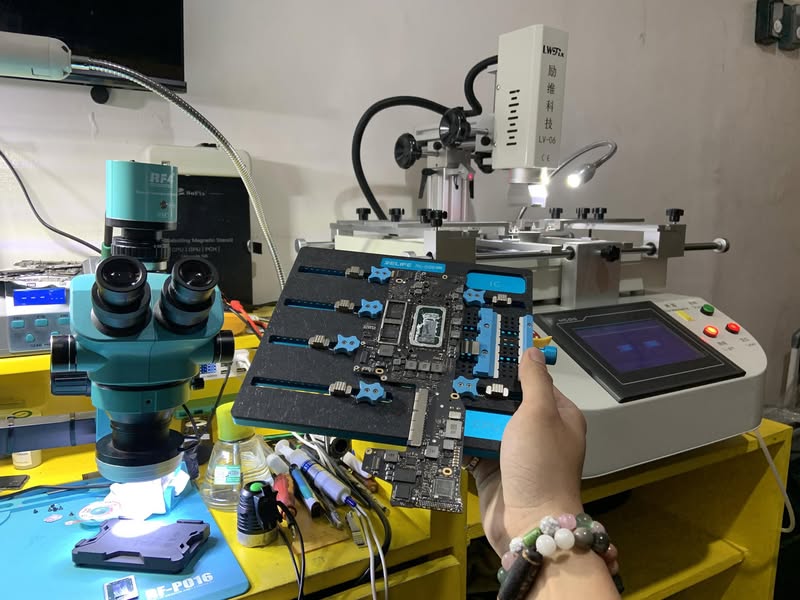
If the fault exhibits the following characteristics, employing BGA Rework Process typically restores functionality at a lower cost:
1. “Intermittent Failure” with Thermal Sensitivity
-
Symptoms: Normal operation when cold, but malfunctions when hot; or random disconnections during driving due to vibration.
-
Mechanism: This aligns with fatigue cracking behavior described in the IPC-9701A standard. Material thermal expansion coefficient (CTE) mismatch causes physical breaks or high impedance at specific temperatures.
2. Structurally Intact High-Value Single Modules
-
Applicable Components: Motor controllers (MCUs), battery management systems (BMS), or advanced driver assistance domain controllers (ADCUs).
-
Prerequisites: No housing deformation or internal water ingress traces. As long as the PCB has not undergone substrate carbonization, BGA reballing success rates are exceptionally high.
Four High-Risk Scenarios Requiring Replacement
In the following scenarios, engineering risks outweigh repair benefits, and ECU Replacement is recommended:
1. Permanent Damage to the Chip Itself
-
Criteria: SoC core short circuit, package explosion, or obvious burn marks from overcurrent.
-
Conclusion: According to IEEE Electronic Device Reliability Research, internal transistor breakdown or electromigration damage cannot be repaired via external soldering.
2. Severe PCB Delamination or Conduction Path Damage
-
Risk: Electrochemical migration due to water ingress or board carbonization caused by high currents.
-
Consequences: Carbonized areas form weak conductivity, reducing insulation resistance. Even if the chip is soldered, leakage or logic false positives may occur.
3. “Secondary Damage” from Lack of Process Control
- Warning: If an ECU was subjected to “brute-force baking” with a heat gun by non-professionals, severe thermomechanical stress may have accumulated internally, causing pad lifting. Such boards have zero reliability.
4. Mandatory recalls involving core safety systems
- Scope: Official recall parts related to braking (EHB/ABS), steering (EPS), and high-voltage circuit-breaking logic. Due to legal liability boundaries and safety redundancy considerations, the official replacement process must be followed.
Cost and Risk: Quantitative Comparison
| Solution | Estimated Cost (USD/CNY) | Repair Cycle | Core Advantages/Risks |
|---|---|---|---|
| Official Full Unit Replacement | $2,000 - $8,000+ | 2-8 weeks (subject to supply chain) | Official warranty with clear liability boundaries |
| Professional Board-Level Repair | $500 - $1,500 | 3-7 days | Short turnaround, cost only 10%-30% of full unit |
📌 Data Reference: According to Mitchell International's EV Repair Insights Report, the proportion of new energy vehicle parts costs (OEM Parts) relative to total repair expenses is significantly higher than that of gasoline vehicles. For vehicles out of warranty, panel-level repairs serve as a crucial engineering solution to mitigate high repair costs.
3-Minute Engineering Pre-Assessment Checklist
Before deciding “repair or replace,” perform the following self-checks:
-
Physical Appearance: Does the PCB show discoloration, burning odor, or interlayer bubbling? (Yes → Replace; No → Evaluate repair)
-
Failure Pattern: Is the issue strongly correlated with temperature cycling? (Yes → Highly likely BGA failure, recommend repair)
-
Value Offset: Does the quoted price for a new assembly exceed 30% of the vehicle's residual value? (Yes → Repair is more cost-effective)
-
Technical Capability: Is there a local facility equipped with an IPC-7711 standard rework station? (Yes → Repairable)
Conclusion: Decision-Making Rooted in Engineering Rationality
The high replacement rate of ECUs in new energy vehicles stems partly from OEMs' “assembly-based” aftermarket strategy, not technical “irreparability.” Truly rational decisions should be grounded in understanding the Physics of Failure.
In a nutshell: If it's a “cracked solder joint,” professional repair is the scientific approach; if it's a “burned-out chip” or “charred circuit board,” direct replacement is the wise choice.
If you’re evaluating repairability, just choose Cost Comparison or Reliability Assessment or Why EV ECUs Are Prone to BGA Solder Failure
A really good blog and me back again.