Common Error Symptoms for Model 3 / Y ECU
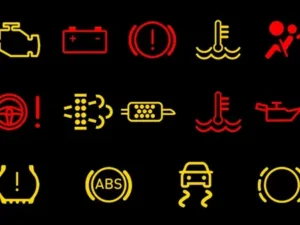
On the Model 3/Y, an “ECU malfunction” typically manifests not as a sudden complete blackout of the vehicle display, but rather through gradual, intermittent failures. Many of these issues are related to solder joints within the control module or power supply components.
For Model 3/Y, the following symptoms are often suspected to be related to internal BGA solder joint issues in the ECU:
-
Screen blackout/restart: The center display suddenly goes black while driving, then recovers after several seconds or minutes.
-
Driver assistance failure: Autopilot/Adaptive Cruise Control cannot be activated, displaying “System temporarily unavailable.”
-
Intermittent fault codes: Repeated “Communication Interrupted / Internal Fault” or similar error codes from the same module.
-
Temperature/vibration sensitivity: Errors occur more frequently when the vehicle is cold, in high temperatures, or on rough roads.
This “intermittent” behavior aligns with poor contact caused by cold solder joints or cracks in the BGA.
The Real Cause of BGA Solder Joint Failure
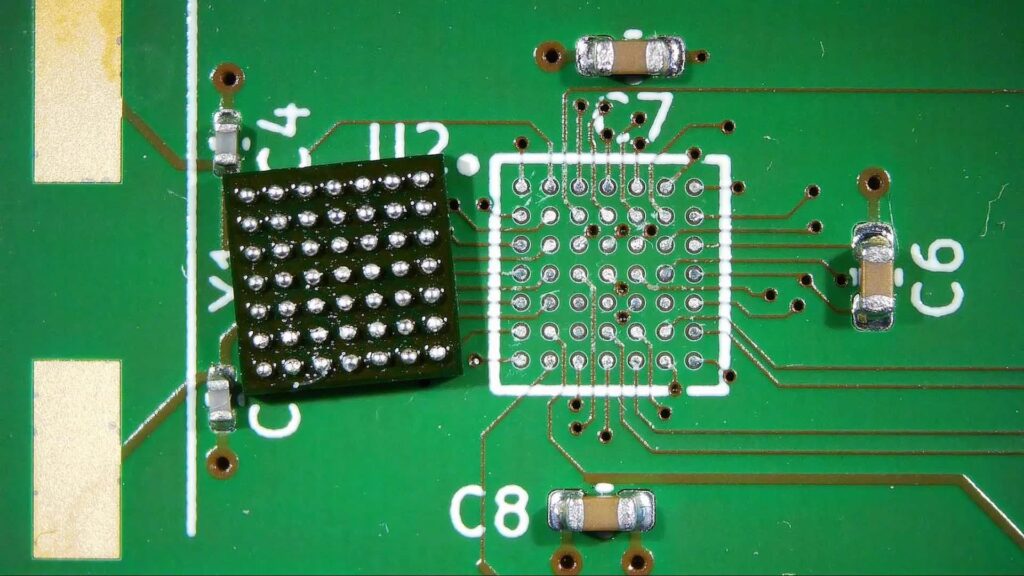
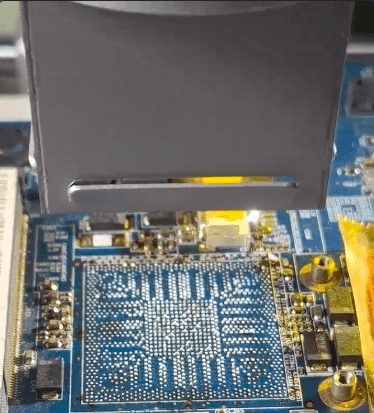
ECU main control chips, memory chips, power management ICs, and similar components are typically packaged in BGAs. Their undersides are covered with solder balls that connect to PCB pads via reflow soldering.
Why BGA solder joints are prone to failure:
-
Thermal cycling stress (particularly prevalent in automotive applications)
-
Frequent transitions from low temperatures (cold starts in winter) to high temperatures (chip heat generation during operation), followed by cooling, create fatigue cracks at the junction between solder balls and pads.
-
Electric vehicle ECUs are often deployed in compartments with significant temperature fluctuations, amplifying thermal stress.
-
-
PCB/chip warpage and “Head-in-Pillow” defects
-
During BGA soldering, slight warpage in the PCB or chip can cause insufficient contact between some solder balls and the solder paste, resulting in HoP defects where “the solder ball adheres to the paste but fails to fully fuse.”
-
Such defects may “barely pass” factory testing but develop into intermittent breaks after use due to pressure or temperature changes.
-
-
Insufficient solder paste volume / moisture contamination / improper reflow profile
-
Inadequate solder paste height or poor quality, coupled with incomplete gas evacuation, leads to voids, cold solder joints, and poor solderability.
-
Inappropriate reflow temperature profile (excessive heating or cooling rates), particularly critical beneath large BGAs.
-
-
Operating environment and automotive vibration
- Prolonged vibration during driving accelerates the progression of existing microcracks, ultimately leading to complete or intermittent open circuits.
In summary, BGA failures on Tesla ECUs fundamentally stem from electronic assembly defects caused by the combined effects of “manufacturing processes + operating conditions,” not some “mysterious Tesla curse.”
Why Do 4S Shops/Official Dealers Only Offer “Complete ECU Replacement”?
The standard practice at official service centers is this: After diagnosing an internal ECU failure, they directly recommend replacing the entire unit—a total cost potentially reaching thousands of dollars, even up to $8,000. This stems from three main reasons:
-
Standardized Process, Simplified Liability: Replacing the entire unit is more controllable than repairing individual boards and simplifies safety accountability.
-
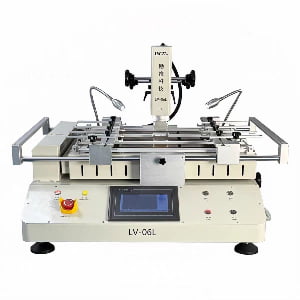
High technical barriers: BGA rework requires specialized production lines and testing equipment unavailable at most service centers.
-
Warranty and regulatory compliance: Official channels prioritize safety, opting for the most reliable solution despite higher costs.
This doesn't mean “board-level repairs are impossible,” but rather that OEM systems don't perform such precision repairs.

Third-Party BGA Rework: What Can Be Repaired and What Are the Risks?
Commonly Repairable Issues
-
Solder joint problems: Poor contact caused by cold solder joints, cracks, HoP defects, etc., can be addressed by:
- Locating the problematic chip → Removing it → Cleaning the pads → Reballing / Replacing the chip → Reflow soldering according to specifications.
-
Peripheral Chip Failures: Damaged power ICs or interface chips can often be restored through replacement.
Prerequisite: The repair provider must possess BGA rework expertise and equipment—not merely “blowing hot air” with a heat gun.
Cases Not Recommended or with Low Success Rates
-
Chip Core Damage: Internal ESD damage or broken bond wires within the package cannot be salvaged even with re-soldering.
-
PCB delamination / burnout: Internal carbonization or delamination in multilayer boards compromises reliability.
-
Critical safety-related ECUs: Involving braking, steering, airbags, etc., carry high legal and insurance risks; proceed with extreme caution.
Risks and Reliability
-
Successful rework ≠ permanent solution. Long-term reliability generally falls short of factory-new parts, but offers a highly cost-effective compromise for owners facing “expired warranties and limited budgets.”
-
When selecting a repair provider, prioritize asking:
-
Do they have experience with automotive ECUs / Tesla-specific cases?
-
Do they utilize X-ray inspection and temperature curve control?
-
What warranty period do they offer?
-
What is the approximate price range?
The following are common ranges only; actual prices may vary based on region, vehicle model year, and module type:
| Solution | Price Tier (Reference) | Suitable For | Features |
|---|---|---|---|
| Official ECU Assembly Replacement | Approx. $3,000–8,000 | In-warranty, ample budget, prefers OEM solution | Most reliable, strong warranty, highest cost |
| Official Warranty Replacement | $0–partial deductible | Still under warranty/extended coverage | Preferred choice, no hesitation |
| Third-party BGA board-level repair | Approx. $300–1200 | Out of warranty, limited budget | High cost-effectiveness, depends on repairer skill |
| Third-party used/refurbished ECU | Approx. $800–2500 | Accepts used parts | Medium cost, requires source/compatibility verification |
Before Deciding to “Replace the ECU,” Try These Steps First
Before shelling out $8,000 to replace the ECU, you can first use more manageable methods to confirm whether the issue truly warrants replacing the entire unit.
Recommended sequence of actions:
-
Identify the scope of the malfunction
-
Document fault scenarios (temperature, road conditions, whether just after startup, etc.). Take photos or videos to save error messages.
-
Use diagnostic reports to confirm if issues point to a specific ECU or bus communication problem.
-
-
Get an Initial Assessment from the Manufacturer
-
Visit a Tesla service center for a comprehensive diagnostic to obtain official fault codes and repair recommendations.
-
Note if the official solution is solely “replacing the entire assembly” and obtain a detailed quote for future comparison.
-
-
Consult third-party repair shops with ECU expertise
-
Provide the diagnostic report, fault description, and ECU model to specialized repair shops, inquiring:
-
Whether they have experience repairing the same model or similar faults.
-
Estimate the cost range and warranty period.
-
-
Note whether they possess BGA rework equipment, X-ray inspection capabilities, and relevant “automotive ECU” case studies.
-
-
Make a decision based on vehicle residual value and usage plans
-
If the vehicle's overall residual value is limited and you plan to keep driving it for another 2–3 years, third-party BGA rework is a highly cost-effective option.
-
For newer vehicles with extended service life or when the faulty module involves critical safety functions, prioritize OEM or high-quality replacement parts.
👉 Before replacing the ECU, here’s what can actually be repaired
-