In the era of new energy, the maintenance logic for electric vehicles (EVs) differs significantly from that of traditional fuel-powered cars. When facing vehicle malfunctions, the phrase “ECU (Electronic Control Unit) damage” is often the most dreaded diagnosis for many owners. Due to EVs' high level of integration, a seemingly minor module failure can frequently result in a staggering repair bill.
This article will thoroughly break down the components of EV ECU repair costs, compare the pros and cons of official replacements versus third-party board-level repairs, and help you calculate the true cost.
First Things First: What Is an EV ECU, and What Happens When It Fails?
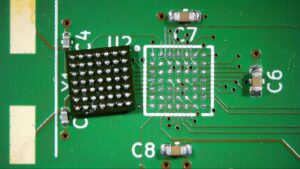
In EVs, the ECU typically refers to critical electronic control units such as high-voltage control, power inverter control, and charging/battery management (BMS). All utilize highly integrated multilayer boards + BGA-packaged chips.
When an ECU fails, the vehicle often becomes completely immobilized, manifesting as inability to start, charge, or due to safety protocol activation. These modules present three major repair challenges:
-
Highly Customized: Significant hardware/software variations with virtually no universal replacement parts.
-
High-voltage safety: Involves high-voltage direct current, requiring adherence to electrical safety standards like NFPA 70E.
-
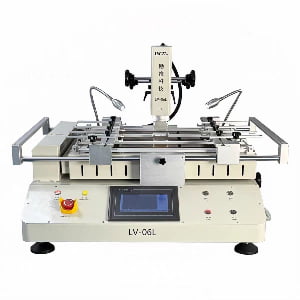
Complex Packaging: Fine-pitch BGA solder joints demand extremely high precision from rework equipment.
Official ECU Replacement: How Are Costs Structured?
At authorized brand service centers (4S dealerships), the default solution for ECU failures is typically “replacing the entire assembly.”
1. Breakdown of Official EV ECU Replacement Costs
-
Parts Cost (60%–80% of Total): According to S&P Global Mobility, approximately 90% of EV critical components originate from OEM channels. New OEM ECU assemblies for mainstream models typically cost $1,500–$3,500, with premium luxury vehicles like Tesla or Lucid potentially commanding higher prices.
-
Labor and Online Programming Fees: Technicians require specialized training for high-voltage systems. Labor includes fault diagnosis, physical replacement, and the critical step of online programming/adaptation.
-
Warranty Premium: Official replacements typically include a 1–3 year manufacturer warranty, with this risk cost factored into the total price.
2. Typical Price Range: EV ECU Replacement vs Repair
According to the Mitchell 2024 EV Repair Trends Report, EV electronics repairs heavily rely on OEM parts, resulting in repair costs averaging approximately 15%–20% higher than for gasoline vehicles.
| Repair Item | Traditional Fuel Vehicle ECU | Electric Vehicle High-Voltage ECU |
|---|---|---|
| OEM New Part Replacement | $1,000 – $3,000 | $1,500 – $5,000+ |
| Third-Party Board-Level Repair | $200 – $600 | $500 – $1,500 |
Third-Party BGA Rework: Cost Structure and Realistic Price Range
After the warranty period expires, third-party ECU repair costs become a major concern for vehicle owners. Professional third-party repair shops significantly reduce expenses by performing “component-level repairs” rather than “entire unit replacements.”
Core Cost Components
-
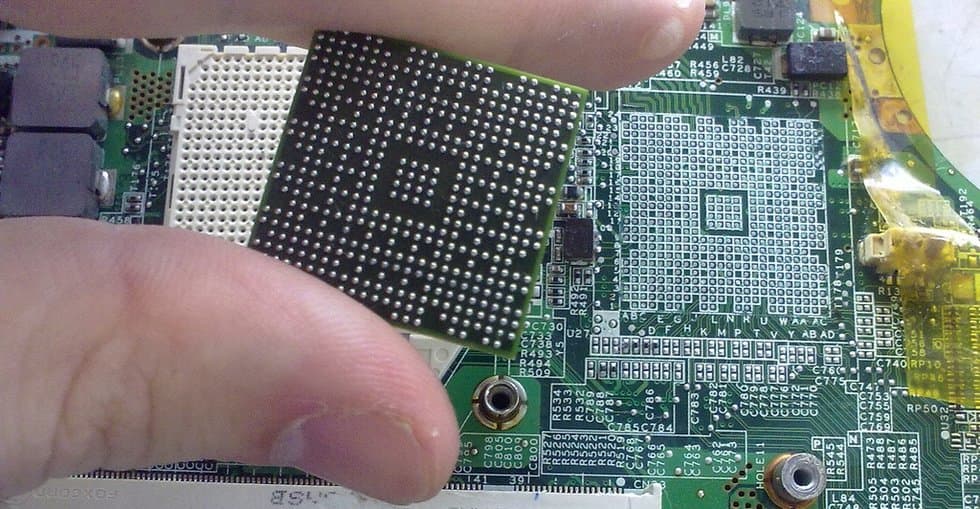
Board-Level Repair Labor: Involves using specialized BGA rework stations for desoldering, reballing, and pad repair.
-
Testing and Validation: Reputable third-party facilities employ fixtures for functional aging tests to ensure stability under high loads.
Price Differential: Why Cheaper?
In the EV ECU replacement vs repair trade-off, third-party repairs typically only replace failed MOSFETs or power management chips. If the official quote is $3,000, professional third-party rework can usually be controlled around $800 - $1,200, roughly 30% of the official quote.
Why Do EV ECUs Seem “Particularly Expensive to Repair”?
1. Structural Reasons: Technical Barriers and OEM Monopoly
EV high-voltage systems lack mature aftermarket parts supply. According to the PwC Automotive Supply Chain Report, this highly centralized supply chain structure keeps per-unit costs elevated.
2. Perception Gap: The “Ordinary Circuit Board” Misconception
Owners often compare ECUs to home appliance circuit boards, but EV ECUs must meet automotive-grade (Grade 0/1) reliability standards. As defined by SAE International, automotive electronics must operate with zero failures under extreme vibration and temperature conditions. This R&D investment ultimately manifests in EV ECU repair costs.
Decision Matrix: Cost / Time / Risk Comparison
| Dimension | Official ECU Replacement | Third-Party BGA Rework |
|---|---|---|
| Cost (EV ECU repair cost) | High (entire assembly + high labor) | Low (typically 20–50% of official price) |
| Troubleshooting Approach | Assembly replacement, straightforward | Component-level precision repair, technician skill-dependent |
| Reliability | OEM process, extended warranty | Depends on workmanship, limited warranty from reputable shops |
| Suitable Scenarios | New vehicles under warranty, core safety components | Out-of-warranty vehicles, non-safety-critical modules |
Summary: What You Should Really Calculate Isn't “Cheapness,” But “Total Cost”
-
When to Choose Official Service? When your vehicle is under warranty, involves core brake or safety systems, or you're a high-net-worth new owner. Here, the premium price buys “certainty.”
-
When to choose third-party? When your vehicle is out of warranty and the official quote exceeds 20% of its residual value. Through a professional third-party ECU repair cost assessment, you can often bring your vehicle back to full health at minimal expense.